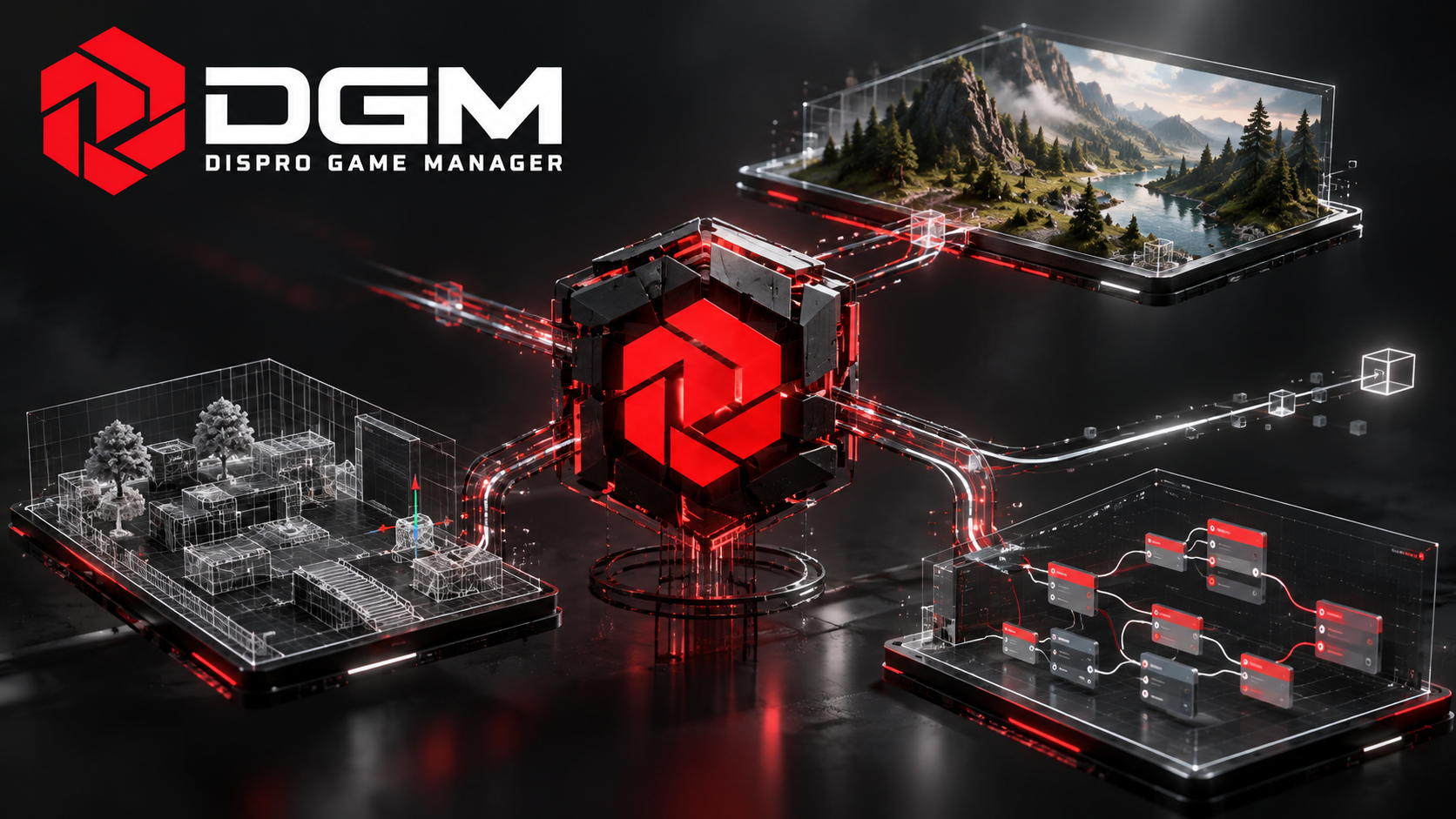
Dispro Game Manager (DGM), by Dispro Game Studio, was created to organize gameplay logic around a clean, flexible and scalable foundation. Its modular architecture covers everything from core character systems to world management, quests and different modes of play.
A modular architecture to shape your game
Originally built for Unity, DGM brings together specialized systems that help organize a project's gameplay logic. Each module focuses on a particular area of the game and belongs to a shared foundation that can grow with the needs of each project.
AbilityManager: active and passive abilities.
BuilderManager: building systems.
CodexManager: an unlockable codex, lore and tips.
CooperativeGameManager: cooperative gameplay logic.
CraftingManager: dynamic, flexible crafting.
GameManagerWorld: global world management.
HistoryManager: conversations with choices that influence how the story unfolds.
InventoryManager: a complete, modular inventory system.
MapManager: map and region management.
MultiPlayerGameManager: multiplayer management.
QuestManager: quests and complex objectives.
SkillManager: skill trees and progression.
StrategyManager: AI and strategic logic.
SurvivalManager: survival systems covering hunger, thirst and weather.
TerrainGManager: terrain, biomes and procedural generation.
Characters, combat and worlds with their own systems
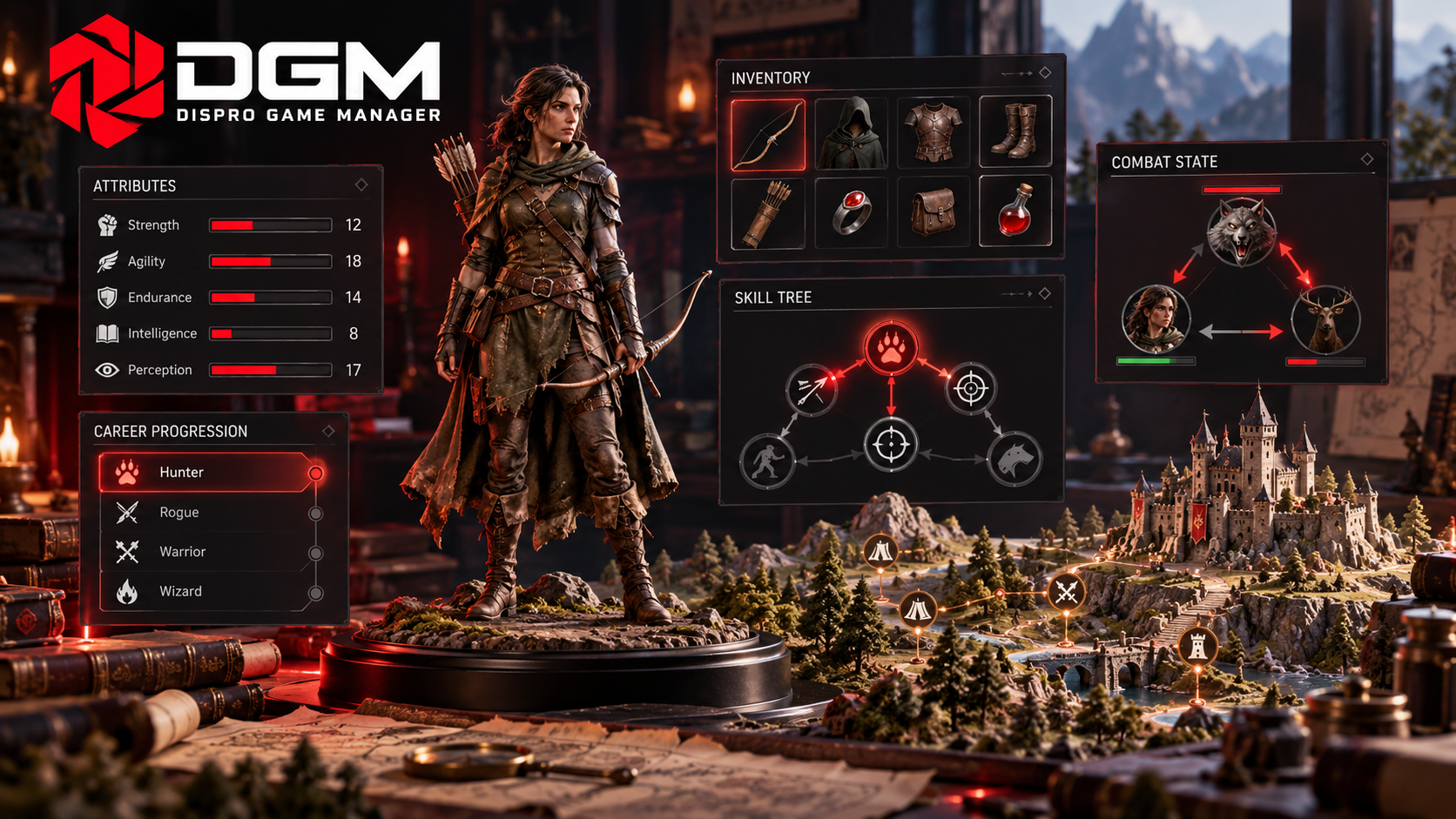
DGM's foundation includes character creation and an extensible attribute system. Buffs and debuffs integrate with attribute behavior to apply stacking, temporary or conditional effects.
The combat system covers events, hits, damage, combos and abilities synchronized with animations. A centralized animator provides state control, while movement supports free, aimed and tactical styles suited to different types of games.
To shape the environment, DGM includes tools for creating regions, zones and dynamic areas. It also supports third-person, first-person, orbital, free and cinematic cameras.
Tools connected to the gameplay experience
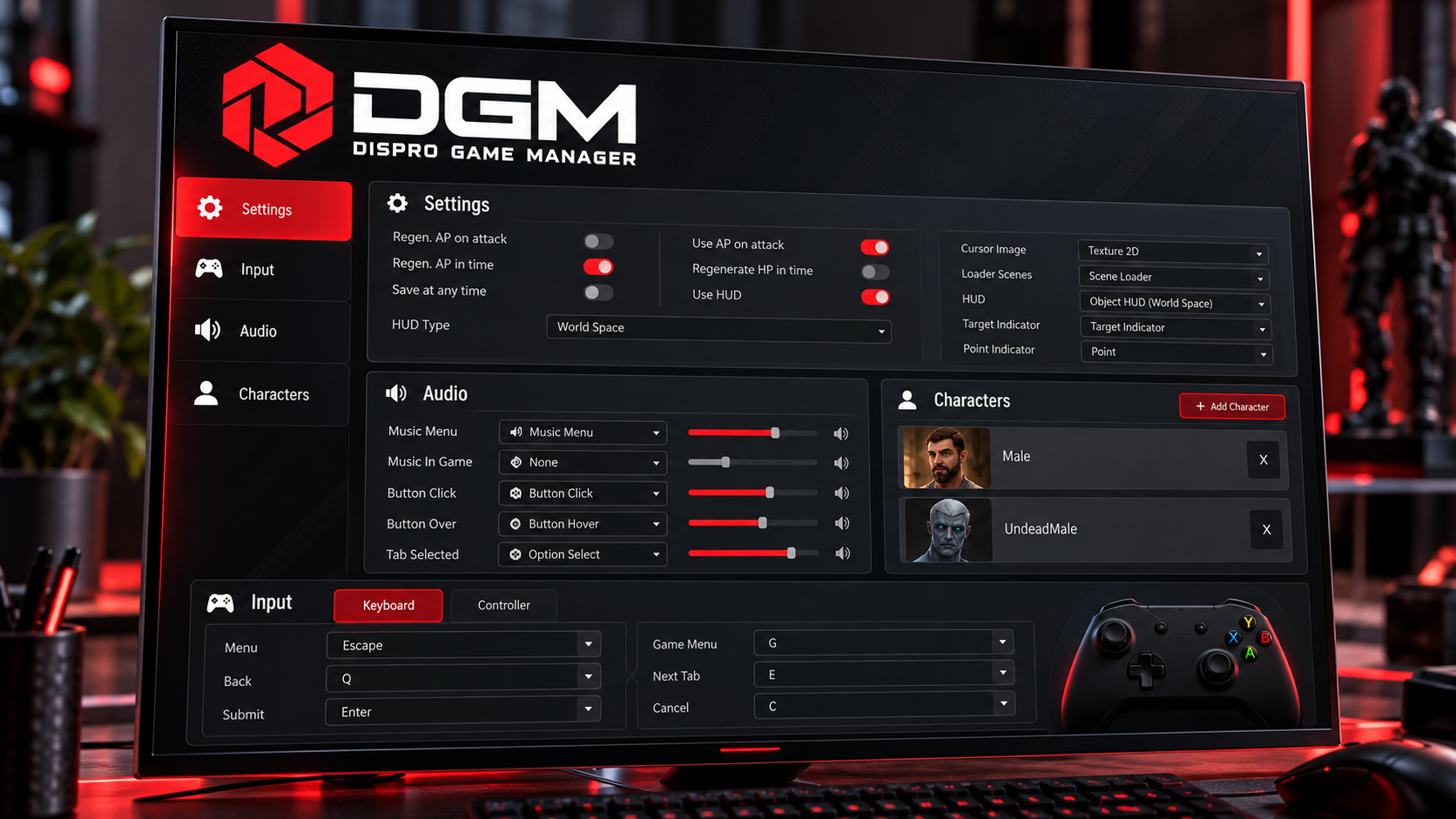
The interface is organized into Display, Game, Menu, Main Menu and Panel layers. The foundation includes built-in multilingual support, fully mapped keyboard and controller input, and sound that can be triggered by gameplay events or states.
Persistence uses a custom ORM, described as high-performance, with an interface for saving data to local files or connecting to external databases. DGM also includes direct data export from the game engine to the database.
The next step: a core beyond Unity
We are working to move DGM's core into an external DLL. The goal is to separate gameplay logic from the rendering engine and pave the way for integration with Unreal, Godot and custom engines, alongside Unity.
This evolution is an initial step toward supporting more languages and programming environments. Each engine and language integration requires appropriate adaptation and interoperability work; this is a development direction, rather than universal compatibility that is already available.
DGM is moving forward with a clear idea: to build a modular gameplay foundation that can grow with each project and reach the environments where it is needed.